Unlike traditional stick-built construction, you face separate land costs, strict zoning rules, and complex installation risks. Financing also proves trickier, with lenders often hesitant to approve loans. Before you commit, you need a clear picture of these potential pitfalls. This balanced view helps you decide if a prefab home truly fits your needs.
Prefab homes cost more than the sticker price. You must budget for land, utilities, permits, and site work.
Zoning laws and neighborhood rules can block prefab homes. Check local regulations before you buy land.
Transportation and installation add risk. Hire experienced crews and budget for delivery costs.
Financing a prefab home is harder. Seek lenders who know factory-built homes and expect higher rates.
Your home's value depends on land ownership. Own the land to see your home appreciate over time.
The sticker price of a prefab home grabs your attention. You must look beyond this number to see the true cost. Land, utility connections, permits, and site work form the real foundation of your budget.
Ignoring these elements leads to financial strain. The disadvantages of prefab houses often hide in these overlooked categories. Let's break down these specific costs so you can plan accurately.
You rarely own the land under your new home out of the gate. Purchasing a plot adds a substantial six-figure sum to your project in many areas. If you lease land instead, you face monthly rent and HOA fees. These recurring costs can rise unpredictably over time. They significantly impact your long-term housing expense.
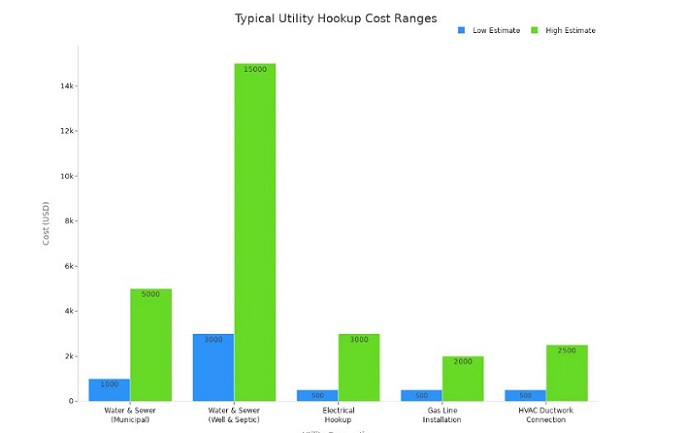
Connect your prefab home to essential services. Utility hookups form a major budget line item. Rural properties especially drive up costs due to longer distances from main lines.
|
Utility Connection |
Cost Range (USD) |
|---|---|
|
Water & Sewer (Municipal) |
$1,000 – $5,000 |
|
Water & Sewer (Well & Septic) |
$3,000 – $15,000+ |
|
Electrical Hookup |
$500 – $3,000 |
|
Gas Line Installation |
$500 – $2,000 |
|
HVAC Ductwork Connection |
$500 – $2,500 |
Your overall utility hookup budget falls between $2,500 and $25,000. Review these estimates for your own property.
Even lower-cost structures like prefab labor camps and prefabricated container houses face these same land and utility hurdles. No home escapes these foundational costs. Prefabricated homes require just as much site investment as traditional ones in this area.
Beyond land and hookups, numerous hidden fees await you. Permit applications, impact fees, and site surveys occur before the factory begins work. These costs are not part of the advertised base price for prefab houses. You might pay thousands for zoning variances or environmental studies.
A percolation test for a septic system costs several hundred dollars alone. A full boundary survey adds another thousand or more. These expenses fall on you before the factory starts building your modular home.
Prefab home construction also demands significant upfront payments. You pay a large deposit when you place your order. This creates a cash-flow burden long before you move in. Traditional builders often require payments spread over several months. Prefab companies need the capital to purchase materials and start production immediately. You must have substantial liquid cash available early in the process. You cannot finance these early costs into a traditional mortgage. You need cash reserves to cover these initial expenses. These hidden fees strain your home budget if you do not prepare for them. Planning for these costs separates a smooth project from a stressful one. Understanding the full financial picture ensures you approach your project with confidence.
You cannot place a prefab home just anywhere. Local zoning laws and restrictive covenants often limit where factory-built structures may sit. Many municipalities classify prefabricated structures differently from traditional site-built homes. Some areas ban them outright. Others impose strict design standards that reduce the cost advantages.
Before you purchase land, verify its zoning classification. You need written confirmation that prefabricated construction is permitted on that specific parcel. A real estate attorney or local planning office can review the regulations for you. Skipping this step leads to expensive surprises.
Restrictive covenants in residential neighborhoods frequently target prefab homes. Homeowners associations draft these rules to preserve a uniform appearance. A court case illustrates this point clearly. The covenant in question stated:
"No manufactured homes whether classified as a mobile home, modular home, or otherwise, and no prefabricated homes shall be permitted on any Parcel in the Premises; regardless of which building codes are applicable to said homes."
The court upheld this restriction, noting that "the construction and value of the home is not at issue... Justified or not, there is a perception that modular homes are of lesser quality and will bring down the value of the neighborhood."
This ruling shows how perception shapes policy. Even a well-constructed modular home cannot overcome a covenant that bans it. You must read all deed restrictions carefully before committing to a purchase.
These zoning hurdles affect every type of prefabricated structure. Prefab labor camps face similar scrutiny in industrial zones. Prefabricated container houses encounter restrictions in residential districts that require minimum square footage or specific roof designs. Even prefab homes in rural areas must comply with county setback requirements and building codes. Each jurisdiction writes its own rules, so local research matters greatly.
Moving your prefab home from factory to foundation presents another set of challenges. Shipping costs escalate quickly with distance. Delivery fees for modular home modules typically range between $10 and $15 per mile. A factory located 200 miles away adds $2,000 to $3,000 per module to your budget. Remote properties increase these costs further due to difficult access roads.
The installation process demands skilled contractors and heavy equipment to set your home properly. Inexperienced crews cause serious problems. Faulty assembly leads to joint failure, leaks, and structural issues that compromise your entire investment. Modules can suffer damage during delivery when proper equipment is not used. Cranes must lift each section precisely into place. Any misalignment creates gaps that water and air penetrate over time.
You must vet your installation team thoroughly. Ask for references from previous prefab projects. Verify their insurance coverage and equipment certifications. The lowest bid rarely delivers the quality you need for a structure meant to last decades.
These practical challenges compound the financial disadvantages of prefab houses. A poorly installed modular home loses its value quickly. Transportation damage delays your move-in date and adds repair costs. You bear these risks personally, unlike traditional construction where the builder manages the entire process.
Understanding these obstacles helps you prepare. Research your zoning laws before signing anything. Budget generously for transportation and installation. Hire contractors with proven prefab experience. These steps protect your investment and ensure your new home serves you well for years to come.
Securing a mortgage for a factory-built structure presents unique hurdles. Many lenders lack familiarity with this construction method. This leads to higher interest rates or stricter loan requirements. You face more paperwork and longer approval times. The disadvantages of prefab houses become clear when you meet with a loan officer. You must provide detailed contracts, site plans, and foundation specifications before approval. Some lenders require a larger down payment to offset perceived risk.
Construction loans for factory-built structures differ from standard mortgages. You need a construction-to-permanent loan that converts after completion. Fewer banks offer this product. The application demands extensive documentation. You provide manufacturer contracts, transport permits, and installation agreements upfront. Interest rates often run higher than those for traditional construction loans. You must demonstrate strong credit and substantial cash reserves. This complexity adds stress to your home project. Plan your loan search early to find lenders experienced with prefab construction.
Appraisal presents another challenge for factory-built structures. Appraisers struggle to find comparable sales in many areas. This scarcity can result in a value lower than your total home build cost. The difference creates a financing gap you must cover with cash.
The data shows strong long-term performance, however. Prefab homes appreciate at nearly the same rate as traditional site-built homes after a decade.
|
Metric |
Prefab (Modular) Homes |
Traditional Site-Built Homes |
|---|---|---|
|
Appreciation (2000–2024) |
211.8% |
212.6% |
|
Annual growth rate |
~5% |
~5% |
|
Total appreciation over 10 years |
~62–63% |
~62–63% |
Several factors support this comparable value growth.
Quality Construction: Factory settings use high-quality materials and advanced methods with fewer defects.
Same Building Standards: Modular homes meet the same safety and energy efficiency regulations as traditional homes.
Customization Options: Greater customization adds substantial value for potential buyers.
Identical Financing & Insurance: Modular homes qualify for the same mortgages and insurance policies.
Your home faces resale concerns due to lingering misconceptions. Some buyers question the durability of these structures despite evidence of equal performance. This perception can slow your home sale compared to a traditional neighbor. The marketability of your home depends on local buyer education. Plan for a longer selling timeline if you choose a prefabricated structure. Understanding these dynamics helps you make a fully informed decision.
Your prefab home's long-term value depends heavily on its foundation and land ownership. Modular homes on permanent foundations with owned land appreciate similarly to traditional site-built structures. The data shows prefab homes on owned land appreciate 2%–4% annually, while those classified as personal property in leasehold arrangements depreciate 3%–5% each year. This distinction dramatically affects your investment. A $120,000 prefab home on owned land could grow to roughly $170,600 after ten years. The same structure on leased land in a mobile home park could drop to $40,400 in value over the same period.
Lifespan expectations also support your investment case. With proper care and maintenance, most modular homes last upwards of 50 years, and some endure even longer. Manufacturers build these structures to the same building standards and codes as traditional stick-built homes. They use materials of equal quality and undergo the same inspections and regulations. Your prefab home can serve you reliably for decades when you maintain it properly.
Marketability presents a separate challenge. Some buyers still question the durability of factory-built structures despite evidence of equal performance. This perception can slow your sale compared to a neighboring traditional home. Prefab labor camps and prefabricated container houses face even steeper resale hurdles. Their utilitarian origins and specialized designs limit buyer appeal. You should plan for a longer selling timeline if you choose one of these structures.
Manufacturers offer customization options, but you must understand their boundaries. Every model serves as a starting point rather than a fixed product. You can adjust room layouts, select interior finishes, add energy-efficient features, and incorporate accessibility elements. Alternative exterior finishes and window styles remain available. Smart-home upgrades also fit within most manufacturers' offerings.
Structural changes become difficult after the factory completes your home. The 1974 National Manufactured Housing Construction and Safety Standards Act requires each section to sit on a permanent chassis. This metal frame raises the home off the ground and prevents major modifications. You cannot add a second story or a basement to most prefab homes. This restriction limits your ability to expand your home as your family grows. Prefab labor camps and prefabricated container houses offer even fewer personalization options. Their standardized designs prioritize function over individual expression.
Prefab homes can be customized to meet your needs and requirements. Even if you cannot find an exact module or layout example, you can always add your personal touch or change any layout.
Consider how much personalization you truly need before you commit. Your home should reflect your lifestyle. Weigh these customization limits against the speed and cost advantages of prefabricated construction. This assessment ensures you choose the right path for your long-term satisfaction.
You now see the full picture. The disadvantages of prefab houses extend far beyond the advertised base price. Land costs, utility hookups, zoning restrictions, and installation risks demand your attention. Financing hurdles and appraisal gaps complicate your purchase further. Long-term value depends on land ownership, while customization limits restrict future changes.
Weigh these challenges against the speed and cost-efficiency of prefab homes. Your decision requires careful research. Consult local zoning officials and lenders experienced with factory-built structures. Request multiple quotes from manufacturers and installation crews. Visit existing prefab houses in your area.
Proceed with your eyes open. A well-planned prefab home project succeeds when you understand every hidden cost and constraint before signing. Prepare thoroughly, and your home will serve you well.
Yes. On owned land, your home appreciates approximately 5% annually. This matches traditional construction value growth. Resale performance holds up well over time.
You can adjust layouts, choose finishes, and add energy-efficient features. Major structural changes remain difficult after factory construction. Your home offers flexibility within preset limits.
Yes. Fewer lenders offer construction-to-permanent loans for factory-built structures. You face higher interest rates and larger down payments. Plan early to finance your home.
Yes. Local regulations and restrictive covenants often limit or ban prefabricated structures. Verify your land permits your home before you purchase. A real estate attorney can help.
With proper maintenance, your home lasts upwards of 50 years. Factory quality meets the same codes as traditional construction. Regular care ensures long-term durability.
सभी अनुरोधों के लिए, आप हमसे संपर्क कर सकते हैं :


 IPv6 नेटवर्क समर्थित है
 वीचैट पर स्कैन करें:



 +8613902808995
 +86 13902808995
 siwenchen@chinawellcamp.com